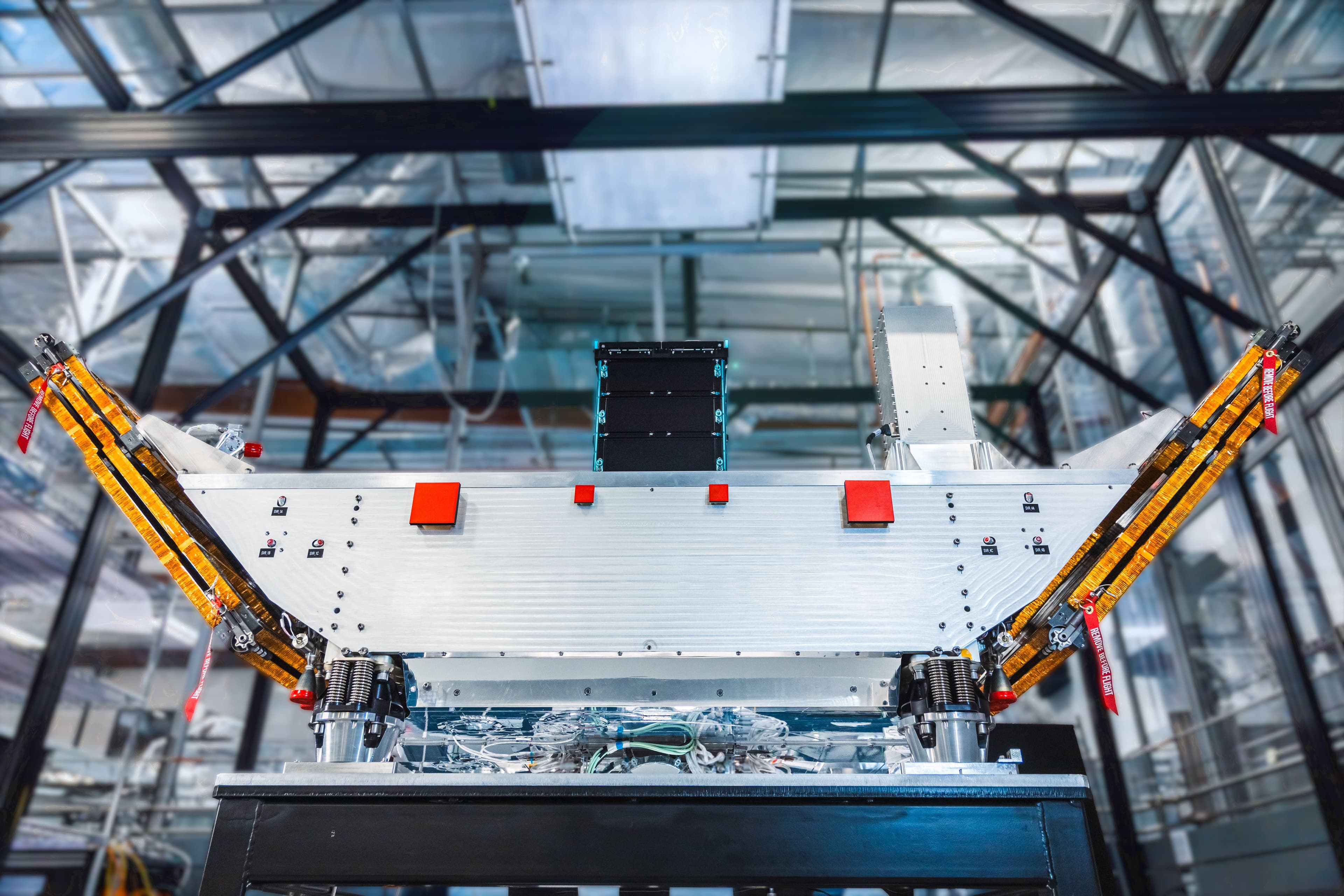
In the lexicon of astrodynamics, the term “delta-v” is defined as the measure of impulse required to alter a spacecraft’s velocity and trajectory. Yet within the broader context of geopolitics, national security, and the global economy, “delta-v” represents the thermodynamic currency of an asset’s survival in orbit.
A satellite launched with a fixed, unrenewable budget of delta-v is inherently static. Hostage to its initial insertion parameters, it is bound to a predictable path and a finite operational lifespan; once its propulsive reserve is depleted, its capacity to adapt evaporates. Conversely, a spacecraft equipped with substantial, renewable delta-v possesses the ultimate strategic asset: operational optionality. It retains the physical capital to reposition, evade orbital hazards, and adapt to a dynamic, crowded environment. This concept has been central to our conviction in Impulse Space from the very beginning. The first phase of the modern space economy was defined by access: lowering the cost of launch, increasing cadence, and making orbit available to many more customers. That was a profound shift, and it unlocked a generation of founders, customers, engineers, and investors who began to imagine what could be built once reaching orbit was no longer the limiting condition. But launch is only the beginning of life in space. After separation from the rocket, the question becomes whether a payload can reach the orbit where it actually creates value, arrive within a relevant time horizon, and preserve enough operational life to perform the mission it was built to serve. While near-Earth logistics represent the immediate commercial necessity, Impulse's architecture is also built for a much grander scale. As humanity pushes toward interplanetary life, the core challenge remains unchanged. Impulse’s distinct focus on high-thrust, storable propellants lays the baseline propulsion infrastructure required to make deep space heavy transport and planetary rendezvous a routine reality. Ultimately, space is no longer a frontier vertical. It is a critical, ubiquitous domain that enables life on Earth. Navigation, communications, missile warning, climate observation, disaster response, logistics, agriculture, financial systems, and energy infrastructure all depend on assets operating overhead. Much of modern life now rests on a space-enabled stack that is invisible until it is disrupted. Space is the high ground that enables every other domain, and as that high ground becomes more contested, the central question is no longer simply whether we can place assets in orbit. It is whether those assets can survive, maneuver, coordinate, and be replenished. As orbit becomes increasingly congested with commercial debris and contested by geopolitical realities, protecting these multi-billion-dollar systems depends directly on their capacity to maneuver—which is, fundamentally, a function of their onboard delta-v. For decades, legacy orbital architectures relied on exquisite, multi-billion-dollar satellites placed in high, static orbits. Designed for a benign and empty environment, these "fragile and few" assets now represent clear structural vulnerabilities. While the broader market has embraced a transition toward proliferated Low Earth Orbit (LEO) constellations to distribute risk, volume alone is an incomplete solution. An unmoving, static constellation is simply a larger, more distributed field of fixed targets. True resilience, however, requires an active operational cycle: the ability to see, predict, maneuver, and replenish. In this continuous loop, delta-v serves as the primary transactional asset. It is the currency required for sensor payloads to align with targets, for operational assets to execute tactical evasions, and for transport vehicles to perform precise rendezvous and proximity operations (RPO) to transfer propellant, effectively depositing fresh delta-v back into the network to extend the lifespan of our most critical infrastructure. Impulse Space sits at the precise center of this architectural transition, providing the heavy transport infrastructure required to shift the entire domain from static positioning to dynamic maneuver. In LEO, where precision deployment and agility are paramount, the Mira platform serves as a highly responsive utility vehicle, managing delicate payload delivery, orbital maintenance, and tactical station-keeping. In high-energy regimes, such as Geostationary Orbit (GEO) and cislunar space, the thermodynamic transaction costs scale exponentially. Historically, moving heavy payloads to GEO required months of slow, highly exposed transit using low-thrust electric propulsion. Impulse’s Helios platform utilizes high-performance chemical propulsion to deliver assets to these high-energy destinations in hours rather than months. Impulse can compress transit windows, avoiding hazardous radiation belts, and preserving the satellite’s own precious onboard delta-v for its operational life. For commercial satellite operators, this is not just an operational convenience; it is a profound economic lever. Shaving months off an orbital transfer translates directly to months of accelerated revenue generation, fundamentally altering the payback period of a multi-million-dollar satellite. In this light, in-space mobility is no longer a marginal commercial optimization tool; it is the strategic control point of the entire orbital value chain. Where legacy paradigms viewed propulsion as a marginal expenditure to extend a satellite's retirement by a few months, the modern security and commercial environments demand mobility as a continuous, baseline requirement. The ability to shift planes, evade debris, and accept fuel in-stride is what prevents our most critical space-based infrastructure from becoming static liabilities. The entity that commands the mobility layer effectively governs the accessibility, longevity, and utility of everything operating in orbit. We are entering an era where static architectures are synonymous with vulnerability. In this new paradigm, movement is survival, and maneuver is the mission. This architectural shift is no longer theoretical; it is being forced by immediate regulatory and defense catalysts. The U.S. Space Force has explicitly designated 'Dynamic Space Operations' as a core requirement for future architectures, acknowledging that static assets are undefendable targets. Simultaneously, regulatory bodies like the FCC are enforcing strict new mandates to mitigate orbital congestion. The market is being squeezed from both ends: defense mandates require tactical agility, while commercial mandates require active debris avoidance and rapid deployment. Both require abundant delta-v. Of course, what separates a visionary thesis from a category-defining company is the engineering pedigree required to execute it. Mobility and maneuverability remain one of the most unforgiving disciplines in aerospace. At Impulse Space, the architecture of this new mobility layer is being built by the very pioneers who conquered the access layer. Led by Tom Mueller—whose work developing the Merlin engine fundamentally altered the economics of launch—the Impulse team possesses an unmatched advantage in rapid propulsion development. They are not merely iterating on legacy designs; they are applying the aggressive, hardware-rich development ethos of the modern launch era to the in-space domain. By vertically integrating their proprietary chemical propulsion systems and designing agnostic, highly interoperable interfaces, Impulse is building the standard for in-space logistics. As the company closes its Series D, we are proud to have been early supporters of Impulse, and we are excited to continue supporting the company as the strategic importance of orbital mobility becomes more visible. We welcome the growing number of serious investors, customers, and partners now entering the category. To anticipate a shifting paradigm is only the first step; the harder, more rewarding task is participating in its steady, disciplined assembly. From our core platform, and through select opportunities alongside it, our aim remains what it has always been: to be useful, aligned, and patient as Impulse helps define the next era of space.